
When the Money Stopped Working
I keep coming back to the third century whenever I think about what happens when people lose faith in their money. Rome had built the most sophisticated economy the ancient world had ever seen, and then the emperors started clipping coins and mixing in cheaper metals to stretch their budgets. The denarius, which had been a reliable silver coin for generations, got diluted to the point where it was barely silver at all. The aureus, the gold standard of Roman currency, shrank in weight and purity right alongside it.
What happened next is exactly what you’d expect if you understand human nature. Merchants started refusing to accept the debased coins at face value, or they jacked up prices to compensate for what they knew the money was actually worth. Trade slowed down because nobody could agree on what anything cost anymore. The Roman economy, which had fueled expansion and infrastructure across three continents, started grinding to a halt in certain regions.
The Ancient Version of a Very Modern Problem
There’s a concept called Gresham’s Law that explains what was happening, and it’s dead simple once you hear it: bad money drives out good money. When people have two types of currency and one is clearly worth more than the other, they hoard the good stuff and spend the junk. So all those debased coins flooded the market while anyone who still had quality gold or silver tucked it away and refused to part with it. The economy ended up running on the worst possible currency, which only made the trust problem deeper.
What gets me is how familiar this cycle feels. A government devalues its currency to cover spending, people catch on, prices rise, and then the government has to devalue even more to keep up. The third century Romans lived through something that modern economists would instantly recognize, and it took a specific kind of leader to break the cycle.
Constantine and the Coin That Changed Everything
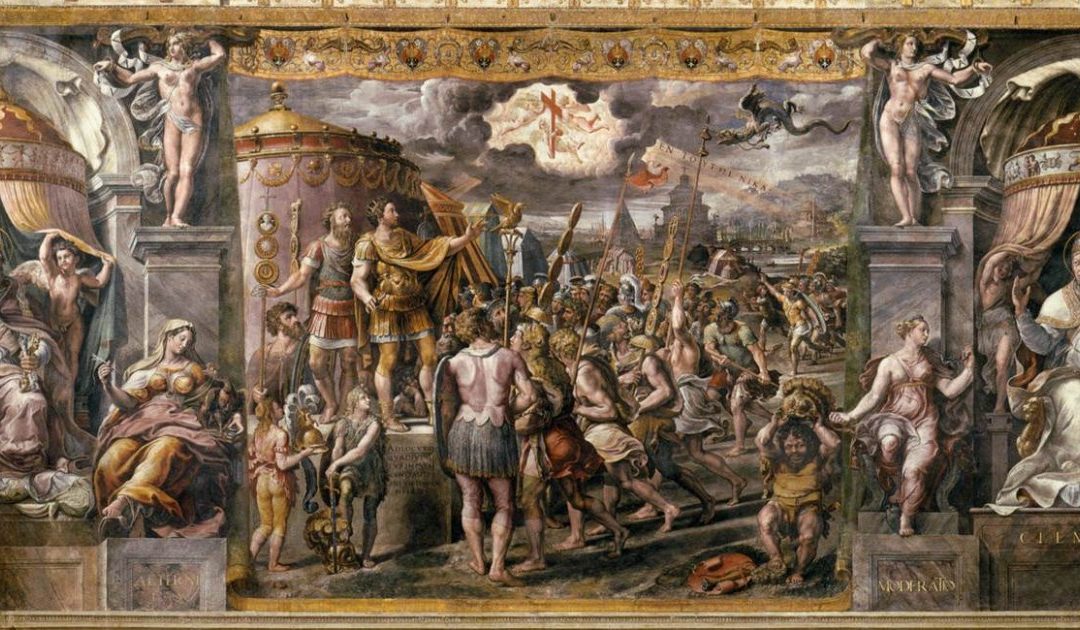
In 312 AD, Constantine won the Battle of the Milvian Bridge and took control of the western half of the Roman Empire. Most people know him for making Christianity the favored religion of Rome, but his monetary reform might have been just as consequential for holding the empire together. By 314 AD, he introduced a new gold coin called the solidus, and he did something that seems obvious in hindsight but was actually radical at the time.
He made it consistent. The solidus weighed 4.5 grams of nearly pure gold, struck at exactly 72 coins to the Roman pound. That ratio didn’t change based on who was emperor or how expensive the latest military campaign was. Every solidus you picked up had the same gold content as every other one, and Constantine backed that promise with actual enforcement.
How Tax Policy Made It Stick
Here’s where Constantine showed real strategic thinking. He didn’t just mint a better coin and hope people would start using it. He required taxes to be paid in solidi, which meant every landowner, every merchant, every provincial official needed to get their hands on these coins. That single policy decision created guaranteed demand for the new currency across the entire empire. If you wanted to stay out of trouble with Rome, you needed solidi, period.
There’s something about this approach that feels almost like a startup founder thinking about product-market fit. You can build the best product in the world, but if nobody has a reason to adopt it, nothing changes. Constantine created the reason by tying his currency to the one thing every Roman subject had to do regardless of their personal feelings about the new coin.
Seven Hundred Years of Stability
The solidus lasted roughly 700 years as a reliable store of value, which is a run that no modern currency has come close to matching. Even after the western half of the empire collapsed, the Eastern Roman Empire kept minting solidi with the same gold content. Byzantium’s version of the coin, sometimes called the bezant, was accepted by traders from Scandinavia to China because everyone knew exactly what they were getting. That kind of trust takes generations to build and Constantine’s initial design held up through centuries of wars, plagues, and political upheaval.
The coin finally started losing its consistency around 1000 AD when Byzantine emperors began doing exactly what the third-century Romans had done, debasing the metal content to cover their expenses. And just like before, the economy suffered for it. The pattern repeated itself almost perfectly, separated by seven centuries.
What This Means for Modern Money
Ron Paul has argued for decades that currency needs to be tied to something tangible, something a government can’t just print more of when the budget gets tight. Whether or not you agree with his specific proposals, the historical record gives him a pretty strong case study in Constantine’s solidus. A coin backed by a fixed amount of real gold outlasted most of the governments that minted it.
I think about this whenever the conversation turns to monetary policy and currency reform. The technology we use for money has changed dramatically since the Roman Empire, but the underlying question hasn’t moved an inch. How do you create a currency that people trust, and more importantly, how do you keep governments from eroding that trust when spending gets out of control? Constantine answered that question with 4.5 grams of gold and a tax policy, and his answer worked longer than almost anything else in human history.