
Imagine the eternal city of Rome in its heyday: marble forums gleaming under the Mediterranean sun, legions marching in triumphant parades, and merchants haggling over spices from distant lands. Yet beneath this veneer of grandeur lurked an insidious force, one that eroded the empire’s foundations like acid on stone—financial folly.
The decline of Rome wasn’t just a tale of barbarian hordes crashing through gates or corrupt senators scheming in shadows. No, it was a slow-burning economic catastrophe, fueled by rampant inflation, reckless monetary policies, and short-sighted fixes that promised quick riches but delivered ruin.
As we journey through this narrative, we’ll uncover how these blunders weakened the mightiest empire the world had known, leaving it brittle and broken.
Caracalla’s Citizenship Gambit: A Short-Term Windfall with Long-Term Costs
Our story begins in the early third century, a time when the Roman Empire still spanned from the misty shores of Britannia to the sun-baked sands of Syria. But cracks were forming.
Enter Emperor Caracalla, a brooding figure whose reign from 198 to 217 AD was marked by paranoia and extravagance.
In 212 AD, he unleashed the Constitutio Antoniniana, a decree that granted citizenship to nearly all free inhabitants of the empire—some 30 million souls overnight. It was a masterstroke of opportunism, or so it seemed.
Citizenship meant taxes: inheritance levies, sales duties, and more flowing into imperial coffers to fund Caracalla’s lavish military campaigns and building sprees. The short-term influx was intoxicating, like a gambler hitting a jackpot.
But hidden in the fine print was a ticking time bomb. These new citizens now qualified for Rome’s generous welfare programs—free grain dole, public baths, and entertainment spectacles.
What started as a revenue boost morphed into an unsustainable burden, straining the empire’s resources and setting the stage for deeper woes.
The Crisis of the Third Century: Emperors, Assassinations, and Currency Debasement
As Caracalla’s severed head rolled in a dusty camp (assassinated by his own guard in 217 AD), the empire plunged into the abyss known as the Crisis of the Third Century (235–284 AD). Picture a whirlwind of chaos: emperors rising and falling like autumn leaves, with over 20 claimants to the throne in just 49 years.
Power no longer resided in the Senate’s hallowed halls or the people’s will; it was seized by generals in frontier forts, their legions bought with promises of plunder and pay. To fund these armies, emperors turned to the mints, debasing the currency with ruthless efficiency.
The denarius, once a proud silver coin nearly pure at 97% under Augustus, was diluted with cheaper metals like copper. By the 270s AD, its silver content plummeted to a mere 0.5%.
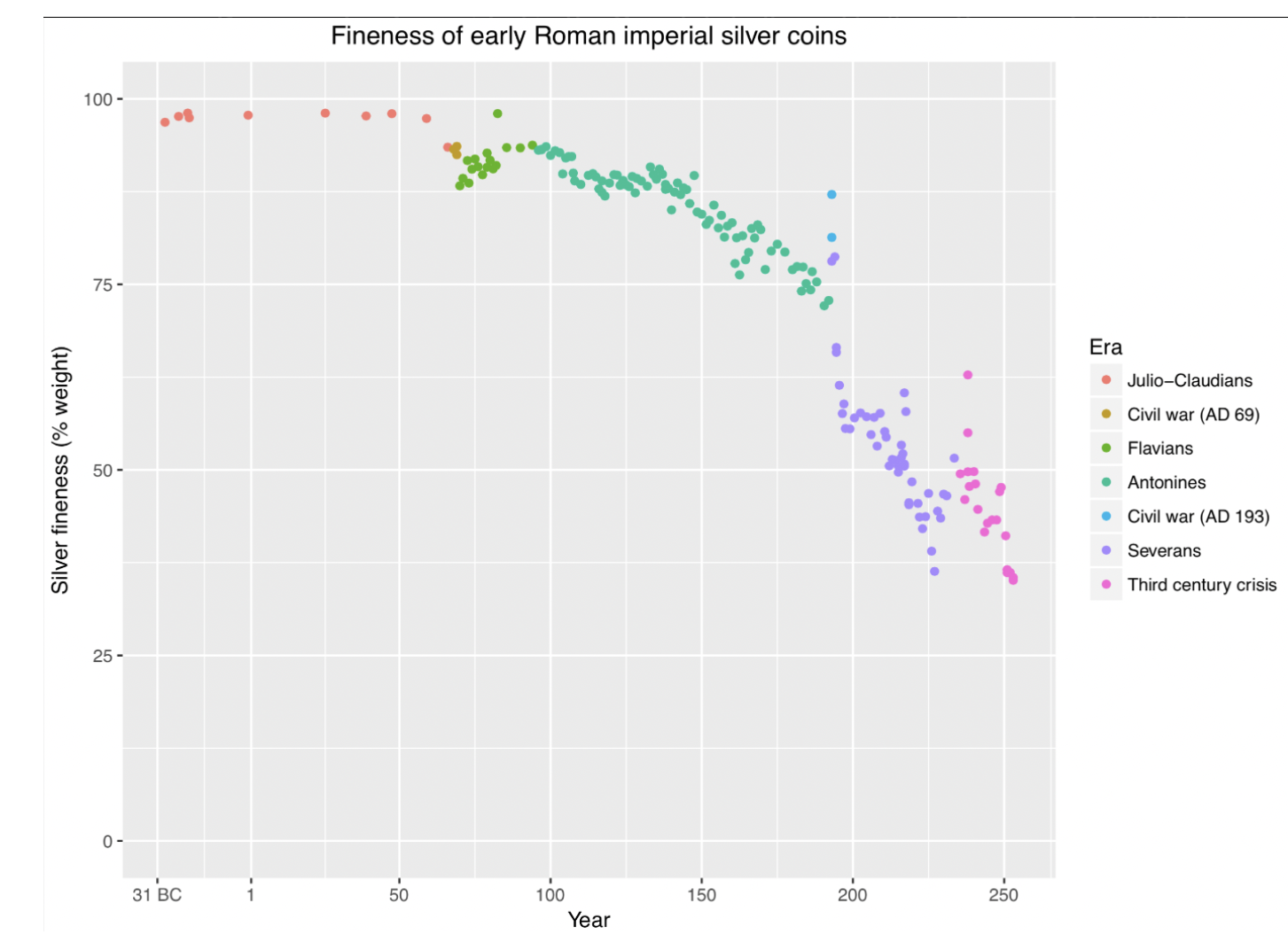
This wasn’t mere tinkering; it was a floodgate opened wide. The money supply ballooned, but production didn’t keep pace. Soldiers demanded higher wages to match the worthless coins, and generals obliged by minting even more.
Inflation’s Rampage: From Economic Boom to Barter and Despair
Inflation roared to life like a beast unleashed. Prices skyrocketed—up to 1,000% in some periods—turning daily life into a nightmare. A loaf of bread that cost a few denarii in the morning might demand a handful by evening.
Merchants hoarded goods, trade routes withered, and ordinary Romans watched their savings evaporate. To fill the ranks, emperors imported barbarian mercenaries, offering double or triple pay to secure loyalty.
These outsiders had no stake in Roman glory; they fought for coin alone. The empire’s borders, once ironclad, became porous as these hired swords turned inward, exacerbating the political turmoil.
Economic confidence shattered; the once-vibrant markets of Rome fell silent, replaced by barter and despair. By the late third century, the empire wasn’t just politically fractured—it was financially eviscerated, split into breakaway realms like the Gallic Empire in the west and Palmyra in the east.
Diocletian’s Reforms: Price Controls, Taxes, and the Tetrarchy
Amid this maelstrom rose Emperor Diocletian, a stern Illyrian soldier who seized power in 284 AD and ruled until 305 AD. He was no dreamer; he was a fixer, wielding reforms like a blacksmith’s hammer.
To stem the inflationary tide, he introduced the solidus, a stable gold coin, and the argenteus, a new silver standard aimed at restoring faith in currency.
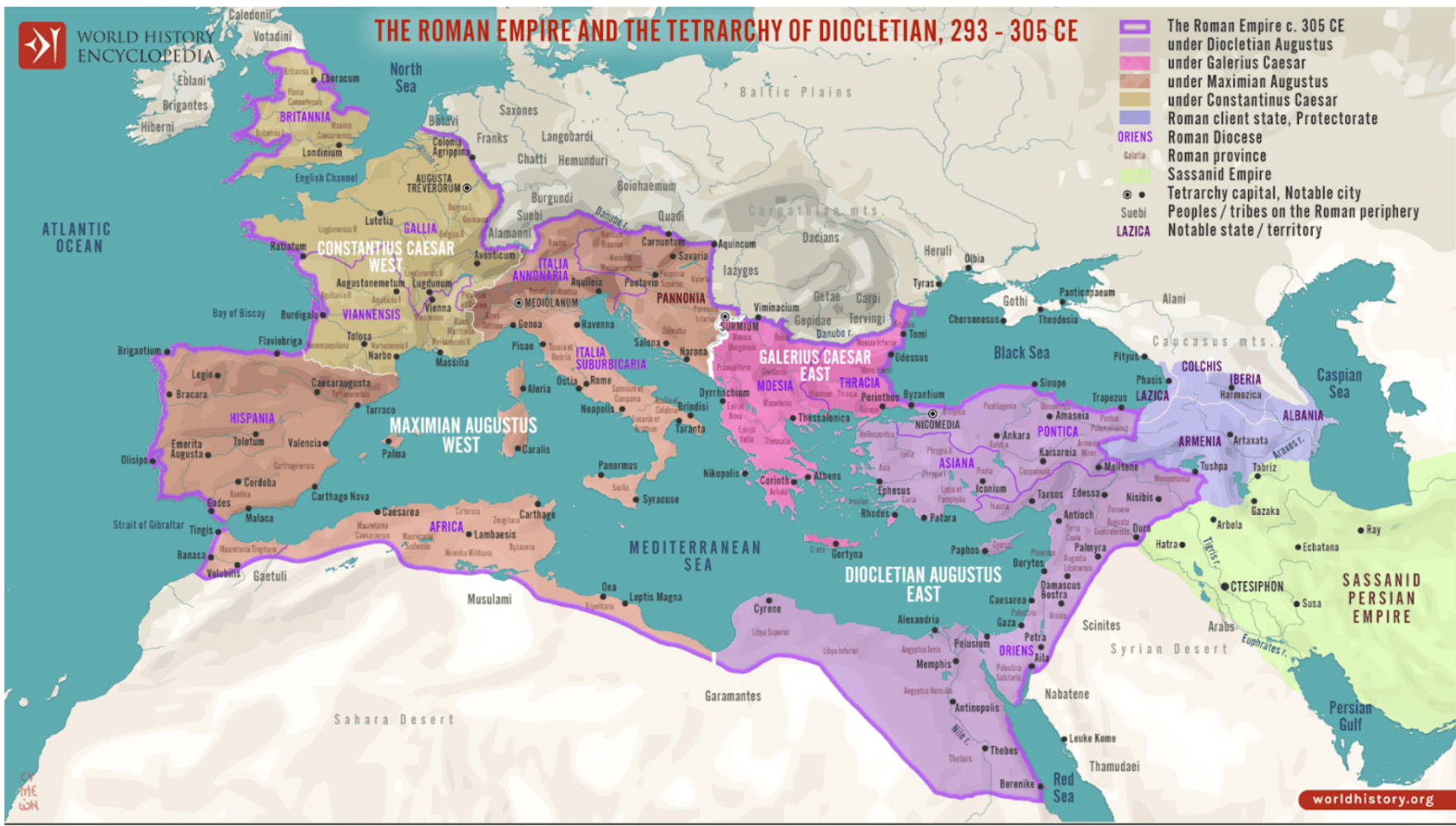
Taxes were hiked across the board, funneled into a bloated military and bureaucracy. In a bold move, he imposed the Edict on Maximum Prices in 301 AD—freezing wages and capping costs on everything from wheat to wool.
Violators faced death. He reorganized the empire into the Tetrarchy: four co-rulers dividing the vast territory for better control, creating administrative dioceses that echo in modern governance.
For a fleeting moment, stability flickered—hyperinflation, which had raged at 15,000% under his predecessors, cooled. But these were bandages on a gaping wound.
Price controls bred black markets and resentment; the heavy taxes crushed the peasantry, leading to abandoned farms and depopulation. Diocletian’s iron fist bought time, but not salvation.
The Western Empire continued its inexorable slide, its defenses crumbling under the weight of unaffordable armies and unpayable debts.
The Final Collapse: From Sack of Rome to the End of an Era
By the fifth century, the end was nigh. The Western Roman Empire, once a colossus, had shrunk to a shadow. In 410 AD, Visigothic king Alaric sacked Rome itself—a humiliation that shook the world.
The empire paid tribute to its former foes, its emperors reduced to puppets manipulated by barbarian warlords. Finally, in 476 AD, the teenage emperor Romulus Augustulus was deposed by Odoacer, a Germanic chieftain.
There was no grand battle, no thunderous collapse—just a quiet abdication. Odoacer sent the imperial regalia back to Constantinople, declaring no need for an emperor in the West.
He styled himself king of Italy, and with that, the Western Roman Empire faded into myth.
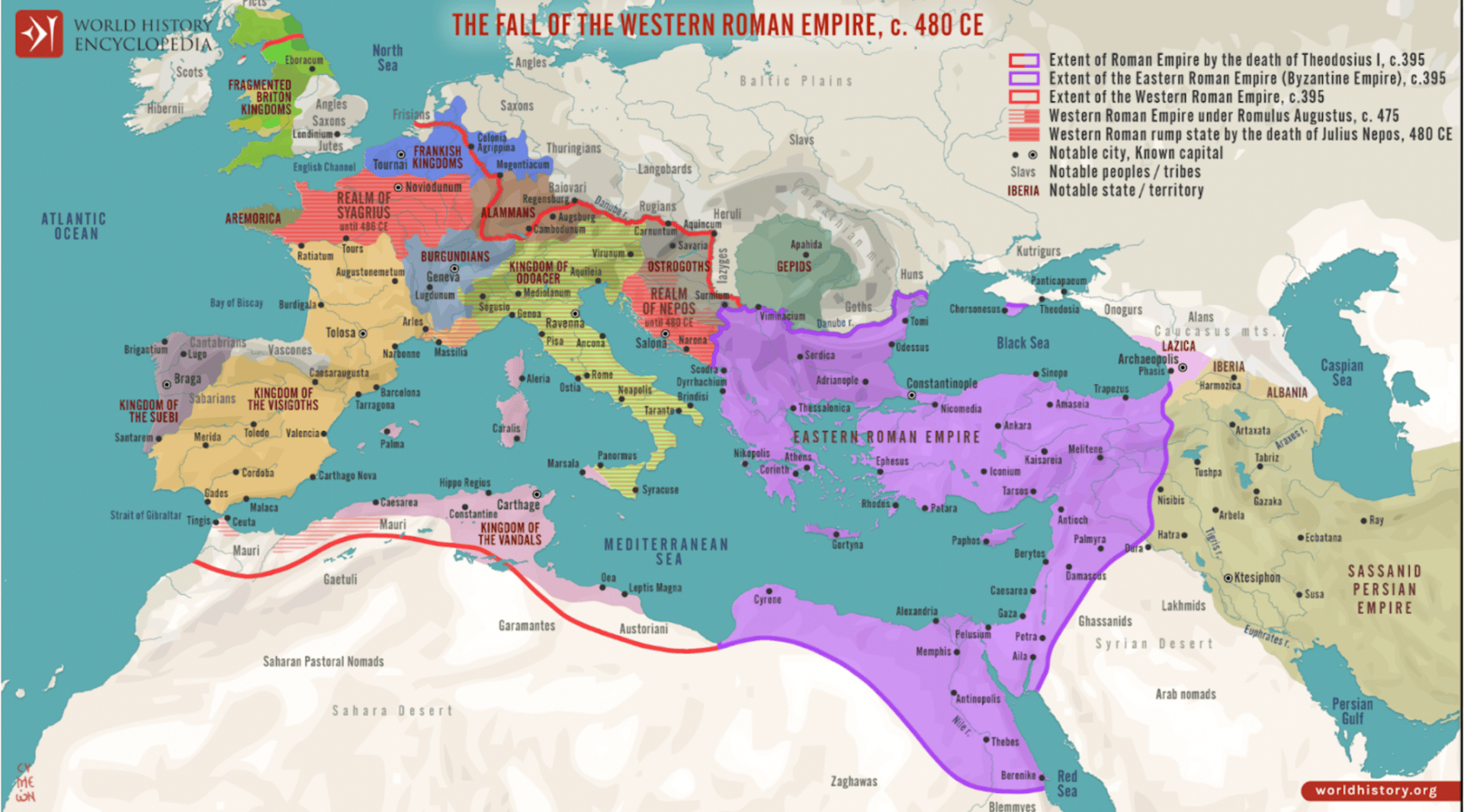
Institutions that had endured for centuries dissolved, not from external swords alone, but because the financial sinews holding them together had snapped.
From this epic saga emerge timeless lessons, whispered across the ages like echoes in the Colosseum’s ruins:
- Short-Term Fixes Breed Long-Term Disasters: Caracalla’s citizenship gambit swelled treasuries briefly but bloated entitlements, illustrating how ignoring structural costs invites collapse. Modern parallels abound in ballooning deficits and entitlement programs that outpace growth.
- Currency Debasement and Military Overreach Spell Ruin: Rome’s endless debasement to fund legions created an inflationary spiral that eroded trust. Today, unchecked money printing and defense spending echo this peril, risking economic paralysis.
- Institutional Weakness Amplifies Economic Woes: Without stable governance, fiscal policies falter. Rome’s revolving-door emperors couldn’t enforce reforms, making decline inevitable. In our era, political gridlock threatens similar fragility.
- Modern Echoes Ring Loud: Governments grapple with debt mountains, currency volatility, and welfare strains. Rome warns that even superpowers can crumble if financial prudence is forsaken.
In the end, the fall of Rome wasn’t predestined; it was forged by human error—leaders chasing fleeting gains, overlooking the empire’s fragile economic heart. Civilizations may perish by the blade, but it’s often the ledger that dooms them first.
As we navigate our own turbulent times, let’s heed Rome’s cautionary tale: build resilient systems, plan for the long haul, and remember that true strength lies not in conquest, but in balance.
What do you think? Could financial mismanagement trigger similar instability in modern societies? Comment below.
If you enjoy historically grounded analysis like this, follow me at @jeremyryanslate and share this article. And if you have a message you want amplified on top podcasts, DM me or connect with my team at CYB Media.